Truck Rental for Practical, Flexible Business Transport
Businesses hiring transport face three decisions before they get anywhere near price. Truck or trailer. Which size. And for how long.
Get those right and rental fits the operation properly. Get them wrong and you end up paying daily rates for a monthly requirement, or discovering on collection day that the vehicle cannot get into your yard.
Here is how to work through each of them.
Truck or Trailer?
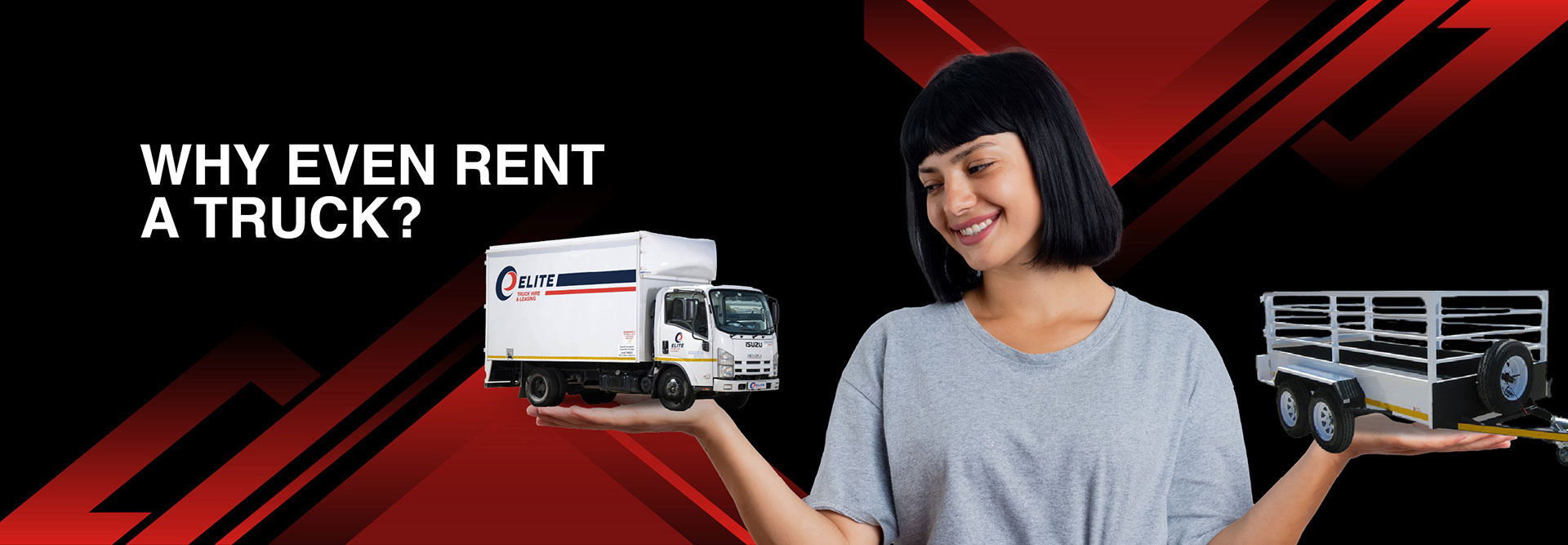
Plenty of businesses weigh up putting a trailer behind an existing vehicle against hiring a truck outright. Trailers have their place, particularly where you already have suitable towing capacity sitting idle.
For most commercial delivery work, though, a truck wins on four counts.
Loading access. A truck body can be loaded from multiple sides, and with a drop side or curtain side configuration, straight off a forklift. A trailer usually means loading from the rear or over the side by hand, which costs you time on every stop.
Stability under load. The weight sits on the vehicle rather than behind it. That matters for heavier or shifting loads, and on longer runs it matters more.
Manoeuvrability. Urban delivery with a trailer is slow work. Reversing into a loading bay, negotiating a tight site, parking on a commercial street — all noticeably harder with something articulated behind you.
Site access and parking. Many delivery points simply are not built for a vehicle and trailer combination, and you will not find out until you arrive.
The case for a trailer is strongest when the load is occasional, light, and you already own a suitable tow vehicle. Beyond that, a truck is usually the safer and faster option.
Which Size
Light and medium-duty trucks are among the most in-demand rental vehicles in South Africa, and the 4 ton and 8 ton classes carry most of that work. They strike a workable balance between real payload and a vehicle you can still take down an ordinary access road and into a standard loading bay.
One thing worth carrying into the decision: the tonnage figure describes payload, not the weight of the vehicle. An 8 ton truck carries around eight tons of cargo, while the loaded vehicle on the road weighs considerably more. If you are working to a site weight restriction or a weighbridge, ask for GVM rather than the number in the name.
For detail on the 8 ton specifically, including the configurations available and when to step either side of it, see 8 ton truck hire. For everything else, view the fleet.
Matching the Rental Term to How You Operate
Not every requirement needs a long commitment, and not every requirement should be booked by the day.
Short-term rental suits temporary contracts, defined pieces of work and genuine one-offs. It is the fastest to arrange and the highest cost per day. If you find yourself booking short-term hires three weeks running, you are paying a premium for something a longer agreement would have covered more cheaply.
Medium-term rental suits expanding operations, extended projects and seasonal capacity that runs longer than a few weeks. The cost is predictable and the vehicle stays with you rather than needing rebooking.
Longer-term and full maintenance rental suits vehicles that are effectively part of your operation. Under a full maintenance agreement, servicing, maintenance and fleet administration stay with us rather than becoming your responsibility, which removes a meaningful amount of cost and admin from your side.
The practical test: if a vehicle is going to be in your operation for months rather than weeks, ask for both a monthly and a full maintenance quote and compare them directly. Ask what each one covers, because that is where the real difference sits.
Seasonal Demand and Temporary Capacity
Many operations run to a cycle rather than a flat line. Rental lets you size your owned fleet to the baseline and hire for the peak, instead of carrying year-round ownership costs for capacity you use twice a year.
It works particularly well for:
- Farmers and produce exporters
- Florists and perishable goods suppliers
- Frozen and chilled product distributors, who can hire refrigerated truck hire capacity for the season rather than the year
- Event and project-based businesses
The part that catches people out is lead time. In peak periods the specific configuration you want may already be out. A truck is easy to find in December. An 8 ton refrigerated with a particular deck length in the second week of December is not.
Look back at last year and find the weeks where your transport demand spiked. Those weeks are predictable, and they can be booked well ahead.
Sort These Out Before You Commit
A few things are far easier to handle in advance than on the day you urgently need a vehicle.
Open an account. Ad hoc hire means paperwork and payment every time. An account means a phone call. If you expect to hire more than occasionally, open an account before your busy period rather than during it. Kindly note that ad hoc rentals are available without having an account.
Check driver licensing. Confirm which of your drivers are licensed for which vehicle classes. Discovering a licensing gap on collection day is an expensive way to find out.
Check access at your sites. Gate width, turning space, overhead clearance and loading bay height. If a larger vehicle cannot get in, that shapes what you can hire before you hire it.
Get Your Rental Structured Properly
Describe what you move, how often, and when it spikes, and our team can work out which structure actually fits rather than defaulting you to a daily rate.
Request a customised quote and tell us how your transport really runs.